
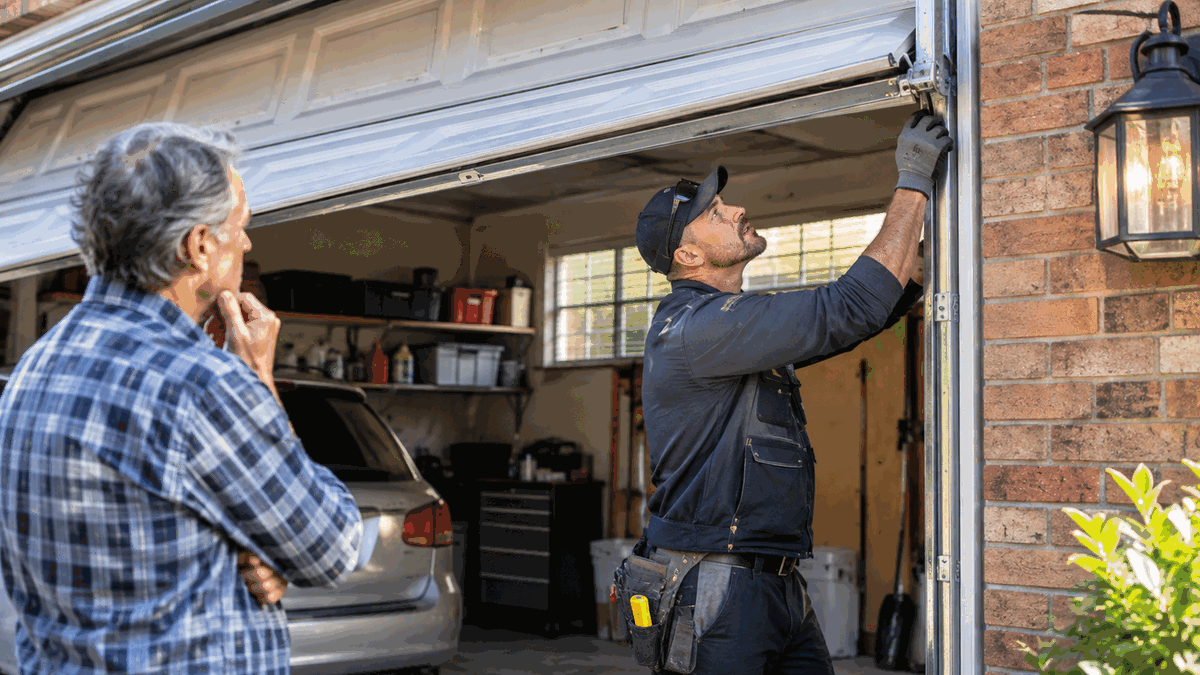
The Garage Door Trapped the Car Inside: How to Handle an Urgent Repair Without Overspending
 A garage door that refuses to open can turn an ordinary morning into an expensive interruption. When a vehicle is trapped inside and work, school, or family commitments are approaching, the pressure to authorize immediate repairs can be overwhelming. Homeowners exploring emergency home repair loan options should first determine what has failed, whether the situation is safe, and how much work is actually required. A clear diagnosis and a sensible payment plan can prevent a mechanical breakdown from becoming a longer-lasting financial problem.
Identify the problem before approving repairs
An automatic garage door consists of several connected parts, including rollers, tracks, cables, springs, sensors, hinges, and an electric opener. A malfunction in one component does not automatically mean the entire system needs replacing.
Begin by observing the symptoms without forcing the mechanism. Does the opener make noise without moving the door? Is the door visibly crooked? Does it start moving and immediately reverse? These details can help a technician identify the likely cause.
Garage-door springs and cables operate under significant tension and can cause serious injuries. Homeowners should not attempt to release, adjust, or repair these components themselves.
If the door is damaged or appears unstable, keep people and pets away until a qualified technician can assess it.
Request an itemized repair estimate
When contacting a garage-door service company, describe the symptoms and ask how its pricing works.
Find out whether there is a diagnostic charge, emergency callout fee, minimum labour charge, or additional cost for evening and weekend service.
Request a written estimate identifying the specific parts that need replacing, labour charges, applicable taxes, and warranty coverage.
If a technician recommends replacing the entire door, ask why repairing the faulty component is insufficient. Structural damage may justify a replacement, but a defective sensor or worn roller usually represents a different level of expense.
Comparing estimates can be useful when the door can be secured safely while waiting for another company.
Consider the cost of being without the garage
The repair bill may not be the only financial consequence.
If the family depends on the trapped vehicle for commuting, temporary transportation may be necessary. Someone who uses the garage to store work equipment could experience lost income or delays completing customer appointments.
Estimate these additional costs separately. They may justify arranging a prompt repair, but they should not automatically justify paying for unnecessary upgrades.
A temporary transportation solution could sometimes cost less than an expensive after-hours service appointment.
The appropriate choice depends on whether the property can be secured and whether a delay creates a genuine safety or accessibility concern.
Compare repair and replacement realistically
A garage door approaching the end of its useful life may require more than one repair over the coming years.
Ask the technician about the condition of the tracks, panels, opener, weather seals, and other major components.
A replacement may offer improved insulation, quieter operation, or better security. However, those benefits should be evaluated against the household’s available funds rather than presented as reasons to replace an otherwise serviceable system.
Calculate the complete installed replacement cost, including removal of old materials, electrical modifications if required, and disposal.
Comparing the estimated remaining life of the existing door with the cost of a new system provides a stronger basis for the decision.
Evaluate financing against the household budget
If the essential repair exceeds available savings, compare payment arrangements with other borrowing options.
A manageable monthly payment is important, but the total repayment amount matters just as much.
Review any interest charges, administrative fees, payment dates, and conditions attached to early repayment. Avoid borrowing an additional amount for cosmetic upgrades simply because financing is available.
Calculate what remains after housing, groceries, utilities, transportation, and existing debt payments. The proposed repayment should fit within that remaining amount without depending on overtime or other uncertain income.
Maintain the system after the repair
Once the door is operating safely, ask the technician what maintenance the manufacturer recommends.
Regular visual inspections, appropriate lubrication, sensor cleaning, and professional servicing when needed can help identify developing problems.
Keep the repair invoice and warranty information in a household maintenance folder. Record the age of major components so future replacement decisions are easier to anticipate.
Setting aside a modest monthly amount for home maintenance can help absorb mechanical failures without requiring an urgent borrowing decision.
A malfunctioning garage door is inconvenient, but a carefully assessed repair can restore access and security without unnecessarily disrupting the family’s finances.